
Bring the heated chamber to a prepared load platform
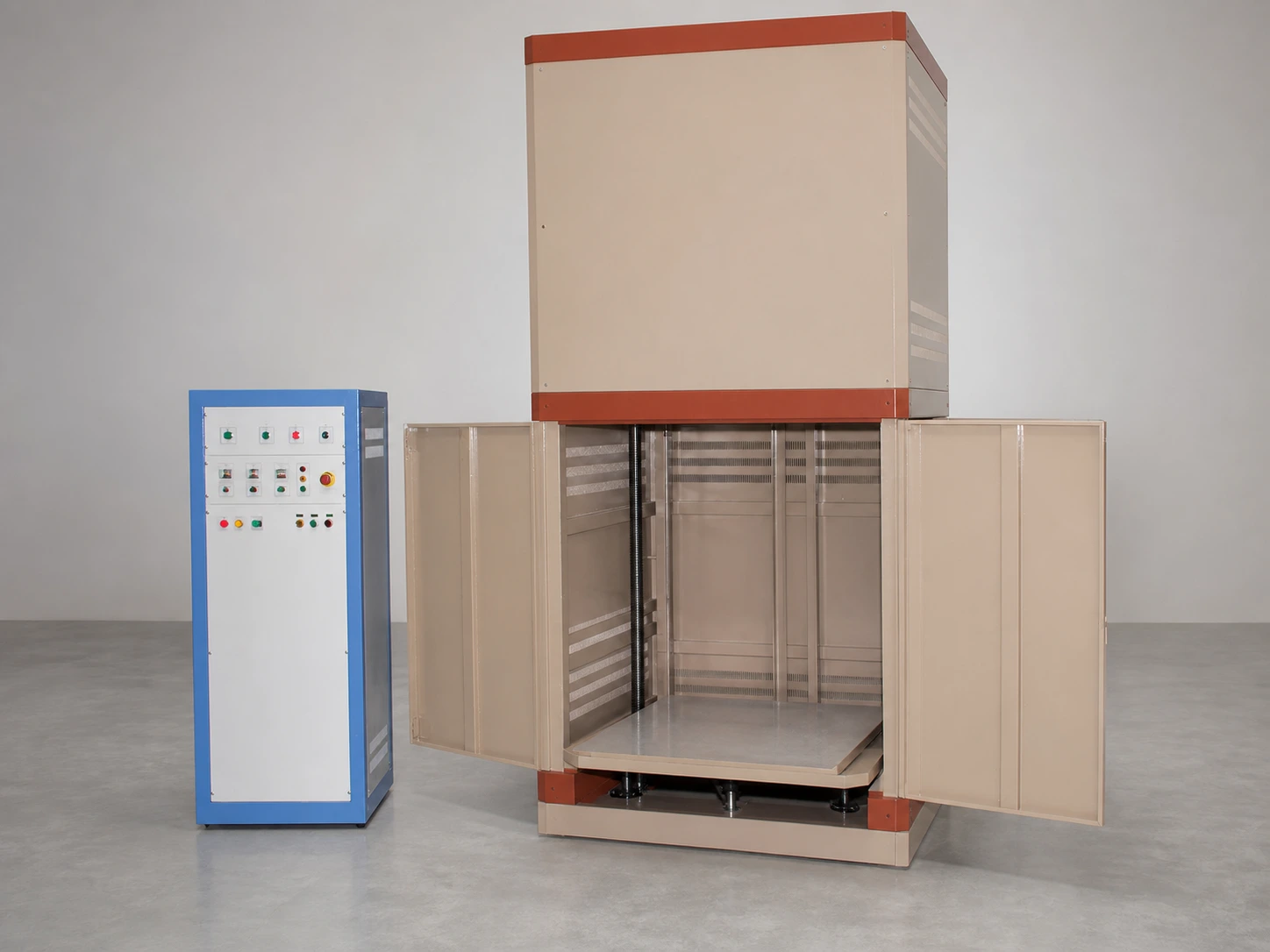
A bottom-loading lift box furnace separates load preparation from the elevated heated enclosure. The workpiece and fixture are positioned on a platform, then the lift brings the platform into the chamber for the programmed cycle. This route is considered when the load is too large, heavy or awkward for practical manual insertion through a conventional front door.
Start with the load, fixture and support method
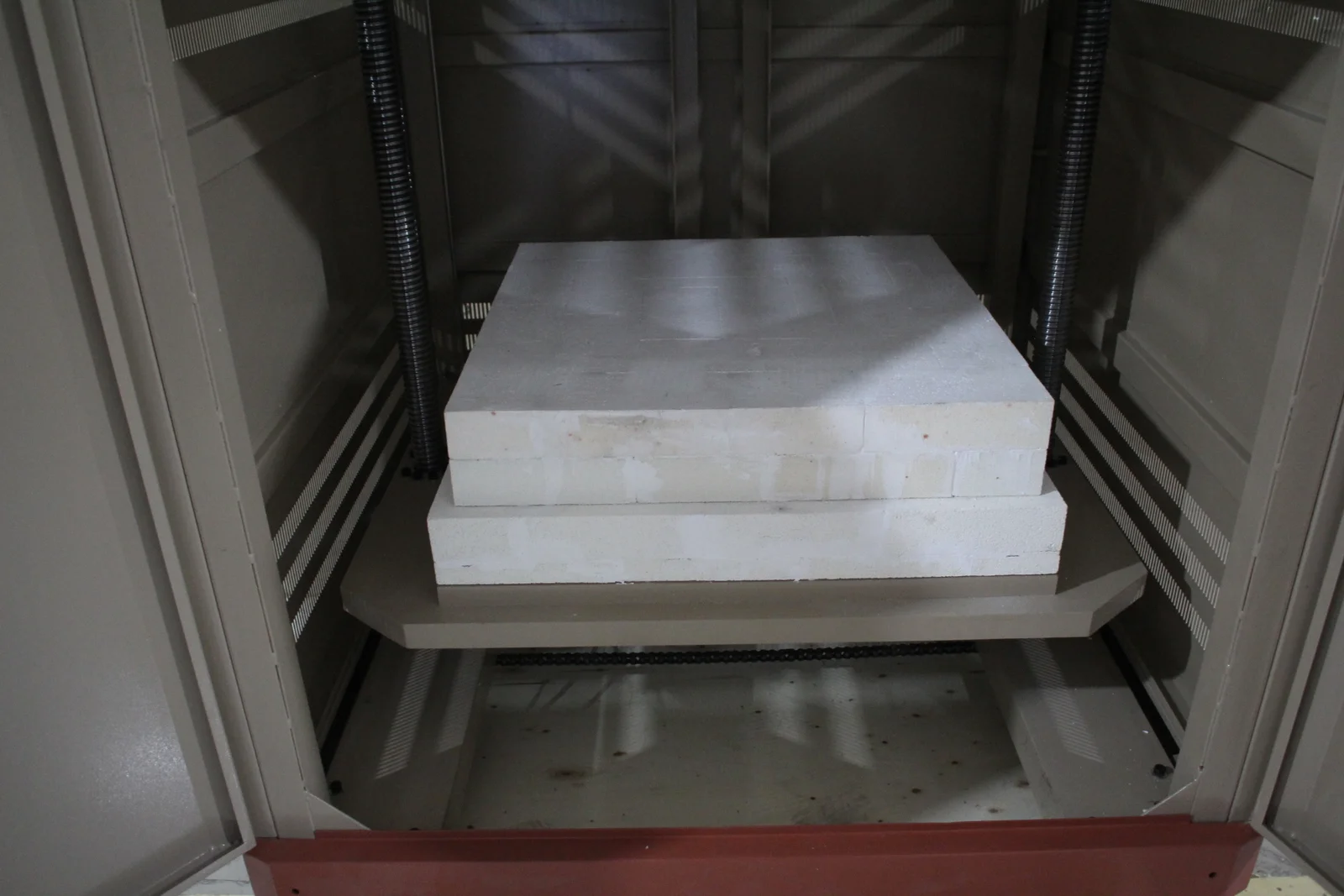
Provide the largest part, fixture, tray or stack to be processed, including total mass and support locations. State how the load reaches the platform and how it is removed after cooling. The platform must accommodate the real load while maintaining clearance from the chamber lining, heating elements, sensors and moving structure.
Map the complete platform travel
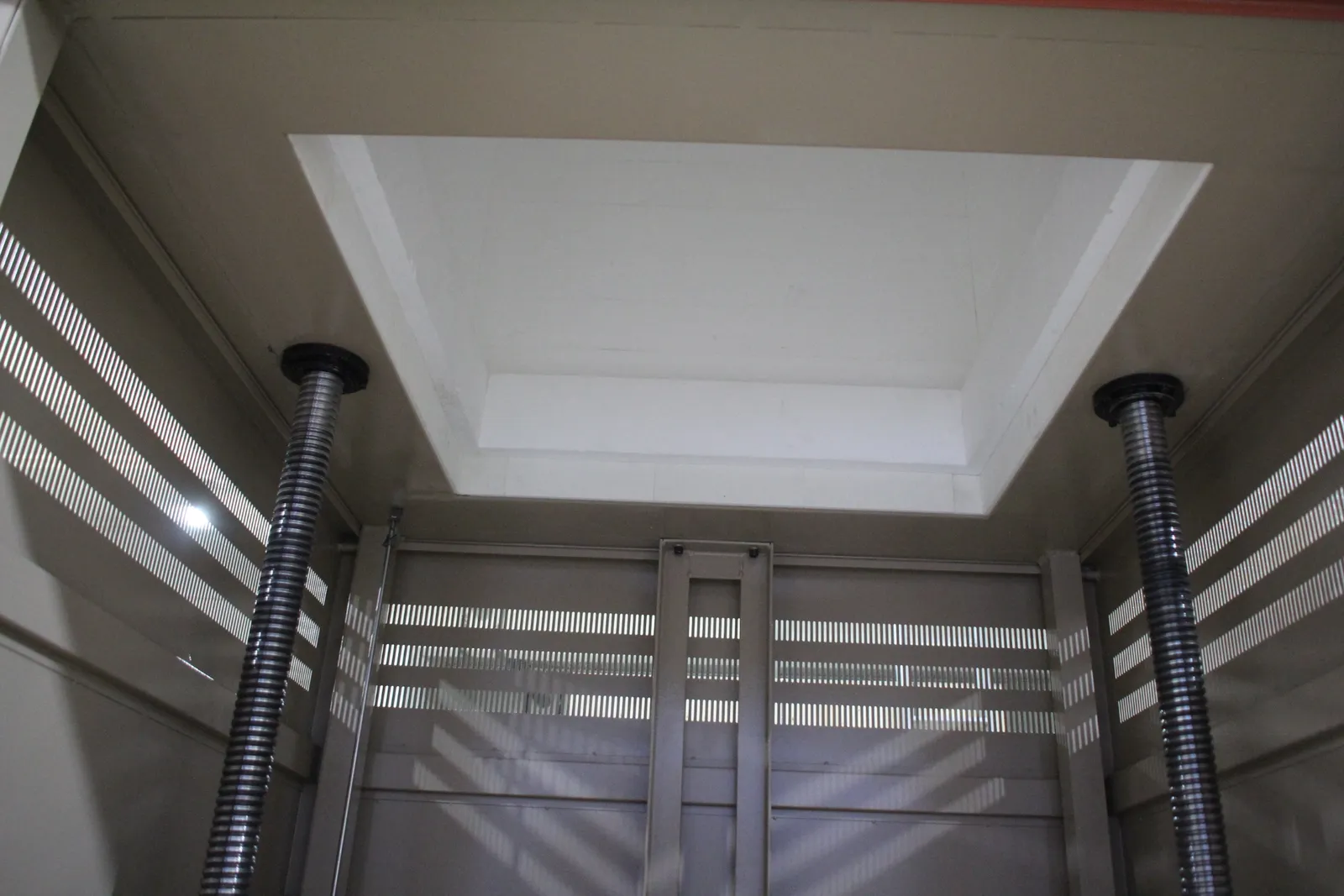
Define the loading height, lowered position, raised process position, vertical travel and allowable alignment tolerance. Include every cable, chain, screw, guide and safety boundary that moves or remains exposed. The installation layout must protect personnel from the lift path and provide access for inspection and maintenance.
Coordinate the platform-to-chamber closure
The platform and elevated chamber form one thermal assembly in the process position. The meeting surfaces, insulation, load clearance and thermal expansion must be reviewed together. State the required operating sequence, closure confirmation and conditions that must inhibit heating or movement.
Build the thermal profile around a large load
Large loads can introduce significant thermal mass and shadowing. Provide the normal working temperature, ramp, hold, cooling method, cycle frequency and required measurement locations. Multi-side heating, zone arrangement, element selection, sensor placement and loaded acceptance testing are configured for the actual chamber and load.
Define lift, control and protection functions
Discuss motion controls, upper and lower limits, position confirmation, emergency stop, obstruction protection, heating permissives, over-temperature protection, alarms and data recording. State whether the system must interface with external handling equipment or facility controls.
Prepare the installation boundary early
Provide the available floor area, slab information, ceiling height, access route, lifting and assembly constraints, ventilation, power and service clearances. Include the separate control-cabinet position and the space required to open enclosure doors. The final foundation, anchoring and guarding arrangement is confirmed for the selected equipment and site.
Information required for a bottom-loading lift furnace RFQ
- Material, process objective, load and fixture drawings
- Maximum dimensions, mass, support points and center of gravity
- Platform size, loading method and required travel
- Usable hot space and required clearances
- Normal working temperature and complete thermal cycle
- Air or other process-environment requirement
- Control, motion, interlock, alarm and data requirements
- Power, floor, headroom, access and destination information
For a smaller overhead-loading route, compare Top-Opening Box Furnaces. For sealed gas or reduced-pressure batch processing, review Vacuum & Atmosphere Box Furnaces.