
Use top access when the load defines the handling route
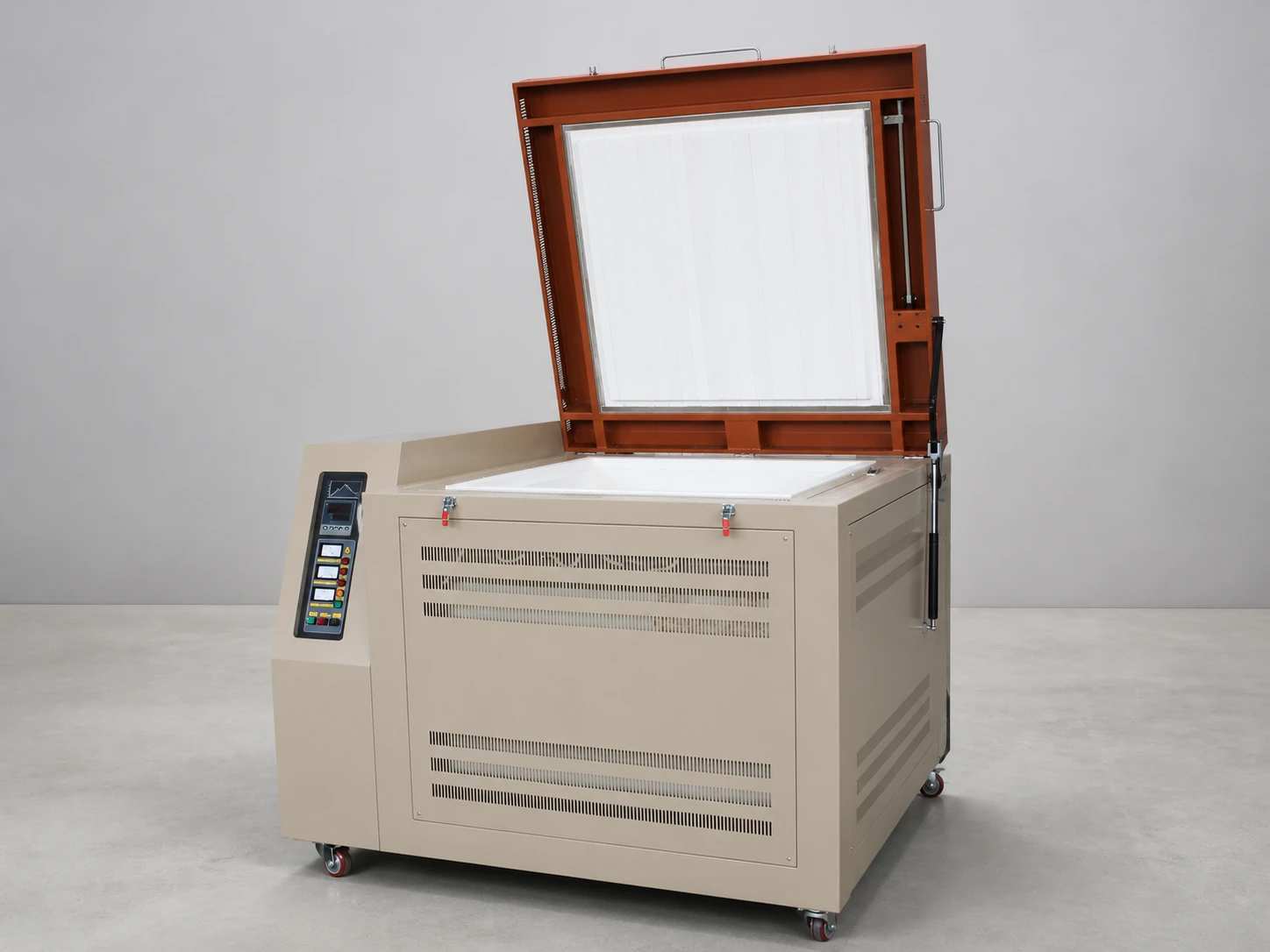
A top-opening box furnace is selected when the part, tray or fixture is more practical to lower into the chamber than to pass through a front door. The open lid provides direct access across the chamber footprint, while the enclosed cabinet, integrated controls and insulated lid remain part of one batch-furnace system. Final chamber size and loading method are qualified around the real load.
Confirm that top loading improves the process
Describe how the load reaches the furnace, how it is supported while hot and how it will be removed. Top access can reduce the need to slide a broad fixture through a front opening, but it also requires a clear vertical handling path. If the workflow is better served by loading and unloading from opposite sides, compare Double-Door Pass-Through Box Furnaces.
Dimension the usable chamber and the opening separately
Provide the required internal length, width and depth together with the fixture and loading clearance. The clear top opening, lid frame and chamber insulation can limit handling even when the internal volume is large enough. Include protruding thermocouples, supports and any removable tray in the dimensional review.
Plan lid movement and overhead clearance
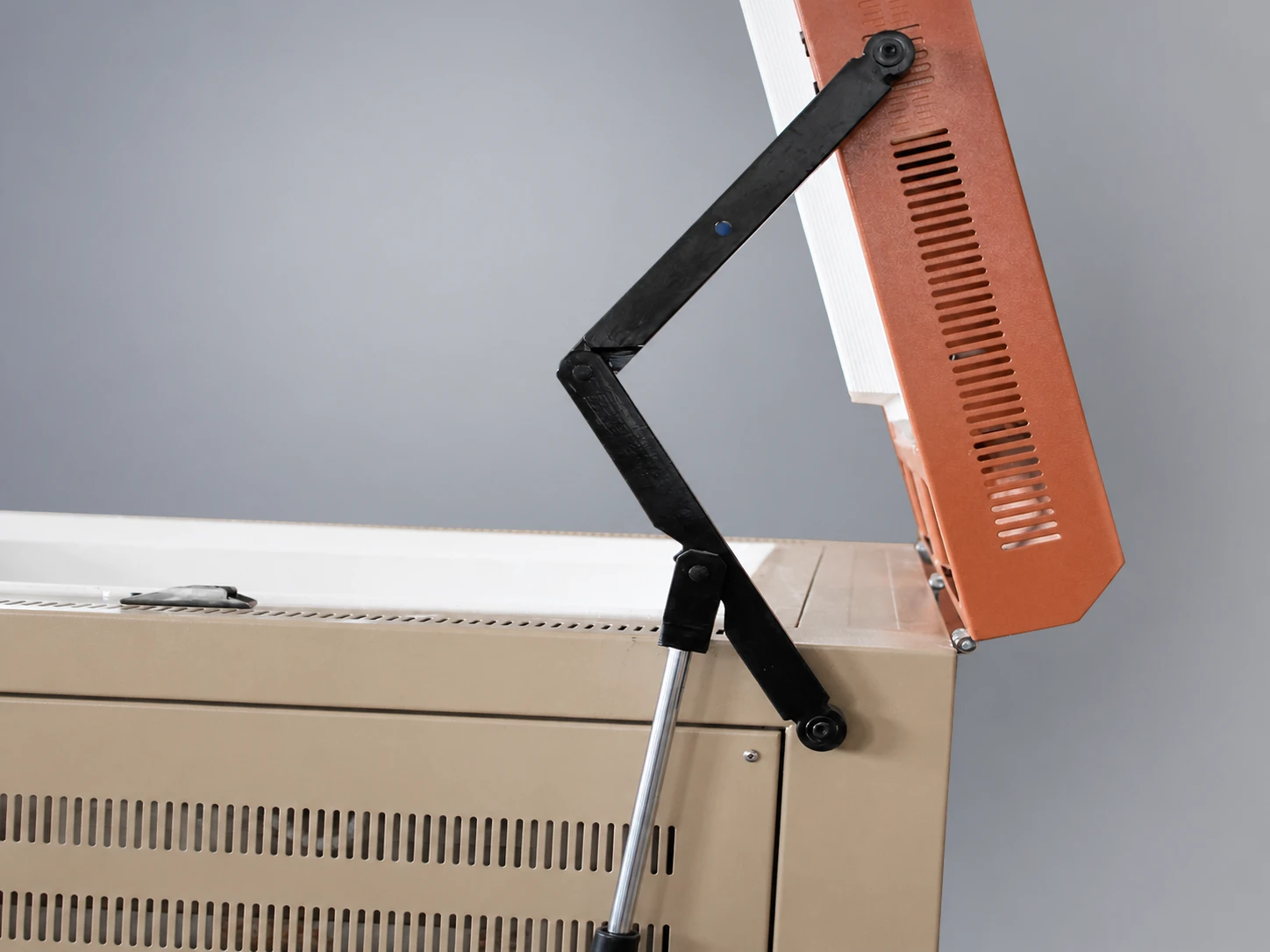
The illustrated furnace uses an articulated linkage and gas-assisted support for the insulated lid. Define the available room above and around the furnace, the intended operator position and any hoist, crane or lifting tool supplied by the facility. Lid weight, opening angle, support, latching and hot-surface protection must be qualified for the selected chamber.
Build the heating arrangement around the loaded cycle
State the normal working temperature, maximum required process temperature, ramp, hold, cooling method, cycle frequency and loaded acceptance objective. Heating-element layout, insulation, sensor position and control strategy are selected together. A cabinet setpoint does not by itself establish the temperature of the load.
Define controls and safety functions
Discuss program steps, over-temperature protection, alarms, lid-position logic, power isolation, data recording and external interlocks. If heating must be inhibited while the lid is open, state the required operating sequence and applicable site standard. Any exhaust or ventilation need should be tied to the material and process.
Installation information for technical review
Provide the destination power supply, available footprint and height, floor condition, access route, ventilation, ambient conditions and service clearances. Include the loading method and the highest point of every tool or fixture through the complete movement path.
Information required for a top-opening furnace RFQ
- Material, part geometry, fixture and batch mass
- Reason for top loading and the proposed handling sequence
- Usable chamber dimensions and required clear opening
- Normal working temperature and complete thermal cycle
- Air, gas or other process-environment requirement
- Lid, loading-tool and overhead-clearance constraints
- Control, alarm, interlock and data requirements
- Power supply, installation space and destination country
For conventional front loading, review Muffle & Box Furnaces. For a heavy load supported on a moving platform, compare Bottom-Loading Lift Box Furnaces.