
Select the process route before the furnace size
Metal melting and alloy preparation require coordinated decisions about the charge, crucible, atmosphere, heating method, pouring route and acceptance criteria. Induction heating can provide a compact crucible-based route, but the correct system depends on whether the material can be processed in open air or requires a sealed vacuum or controlled-gas environment.
Open compact induction melting
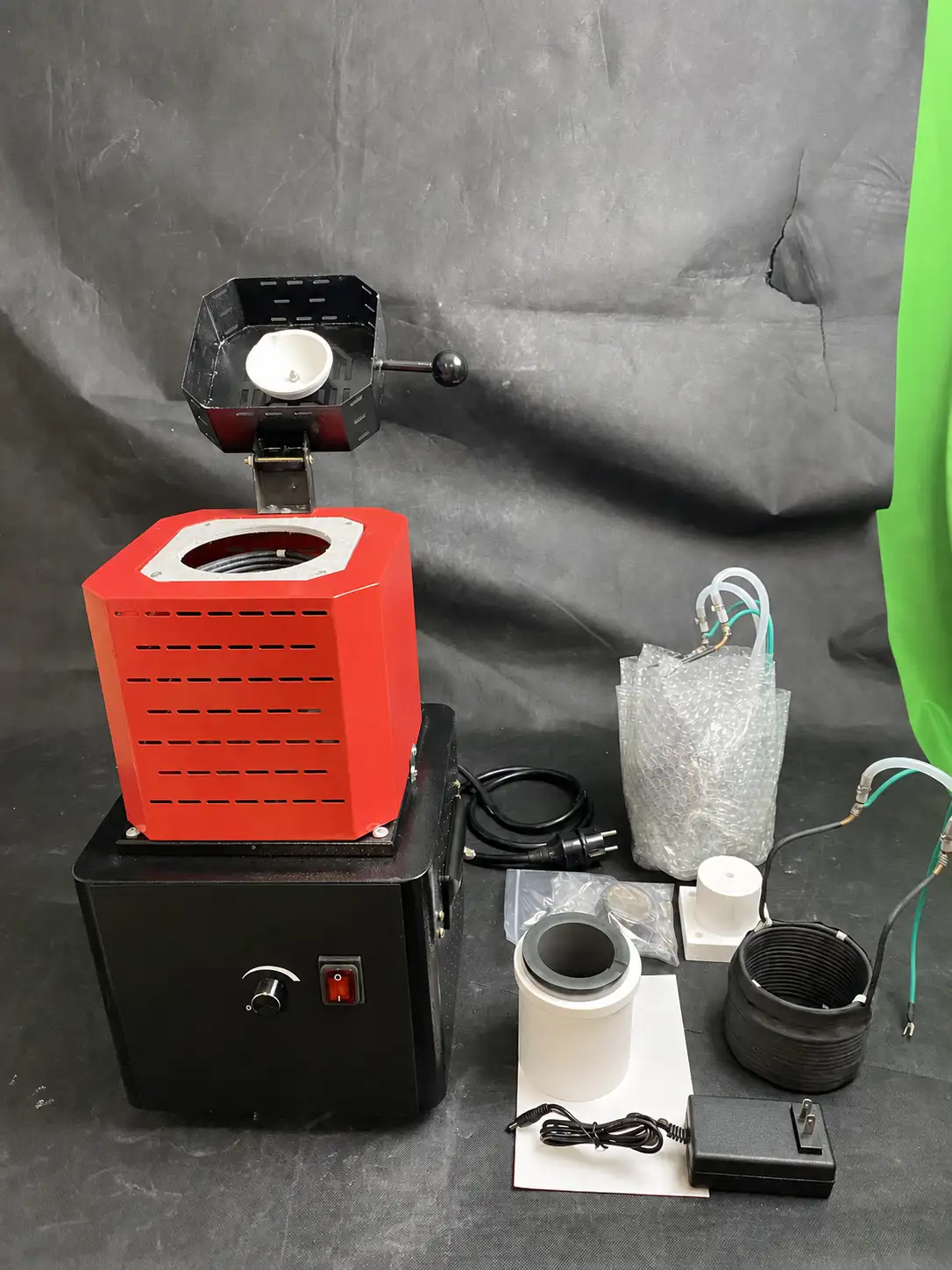
An open system may fit compatible small charges when oxidation, fume and contamination risks can be managed by the material procedure and local facility. It offers direct access to the crucible and a compact tilting or removable-crucible workflow. The proposal must still define the crucible, coil, cooling water, power, endpoint and hot-metal handling boundary.
Vacuum or controlled-gas induction melting
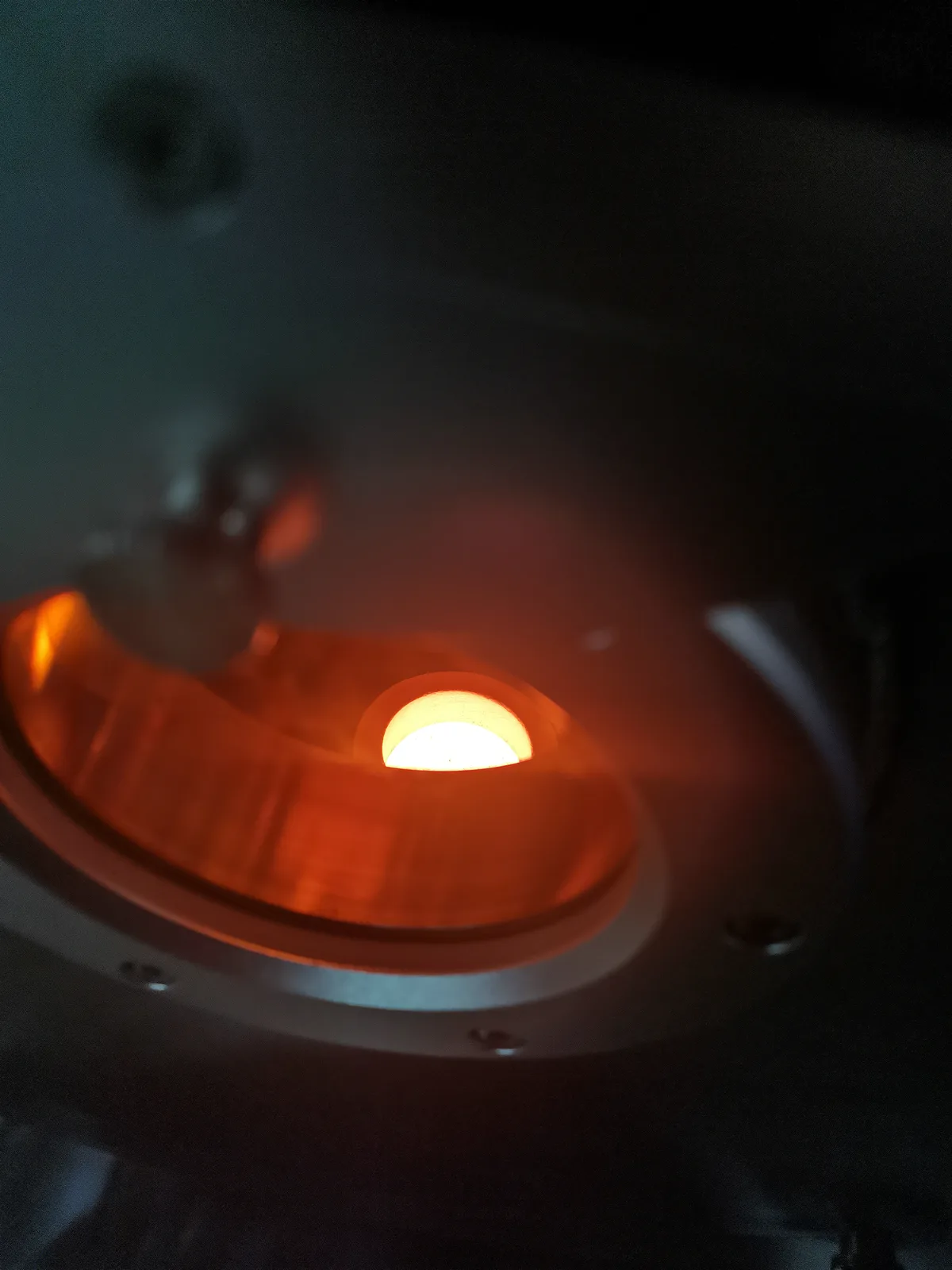
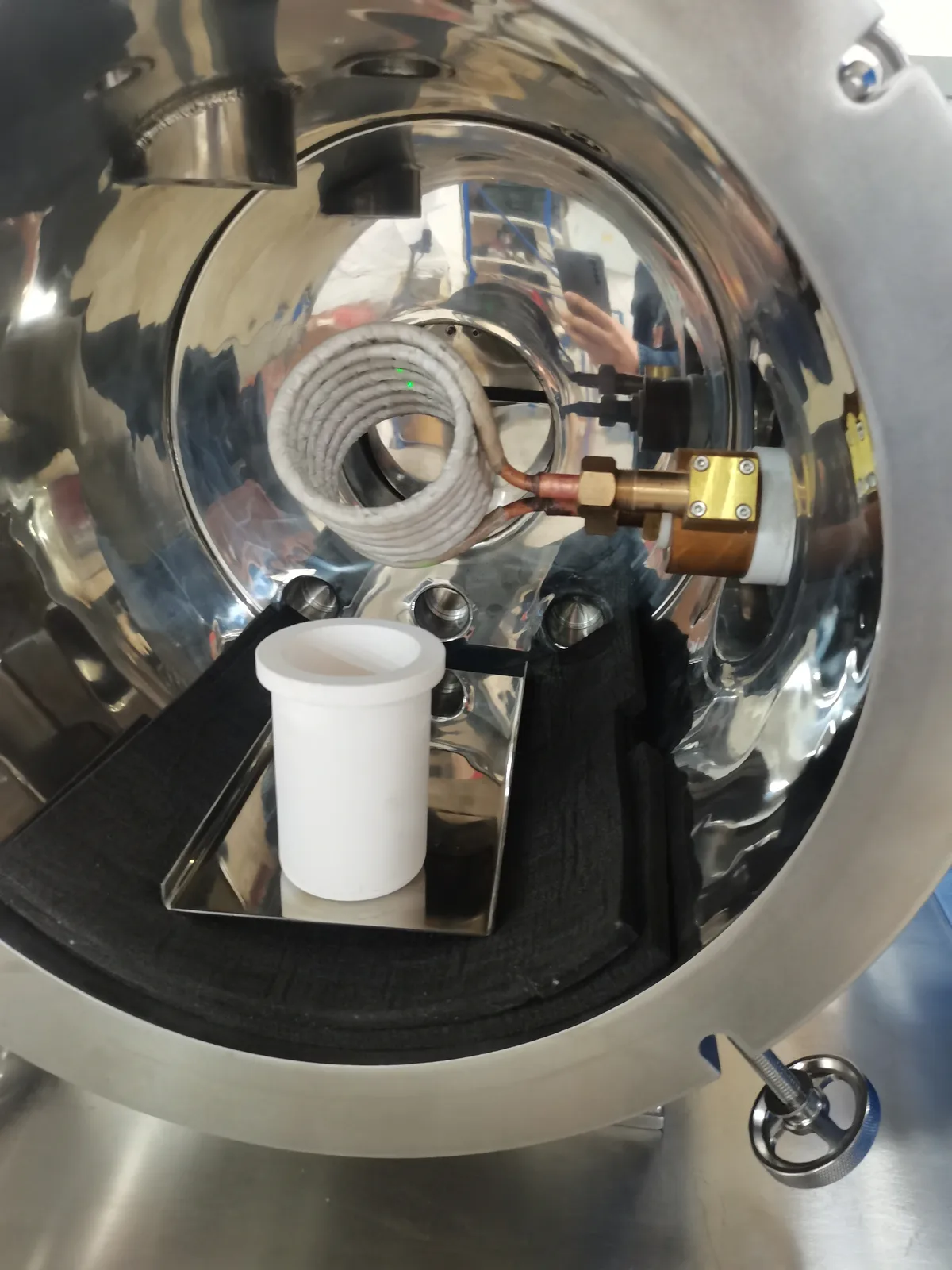
A sealed vessel is appropriate when the material or process requires reduced pressure, inert gas, controlled venting or tighter contamination management. The equipment scope expands to include the chamber, door and seals, pumping and gas systems, pressure measurement, feedthroughs, interlocks and a controlled opening sequence.
Crucible compatibility and contamination control
Crucible material and dimensions must be reviewed against the charge, process temperature, chemical interaction, thermal shock, desired purity and replacement plan. Tools, moulds, support parts and previous material exposure may also affect contamination control. Provide current material and crucible information with the inquiry.
Pouring and downstream handling
Describe whether the melt is poured into a mould, transferred to another container or allowed to cool in the crucible. Define the receiving envelope, required orientation and operator or mechanism movement. Include ventilation, guarding, spill and emergency provisions appropriate to the material and facility.
Acceptance for development and production duties
For development work, acceptance may focus on equipment function, pressure or gas sequence, cooling stability and a defined trial. For repeat production, add recipe control, batch records, repeatability criteria, maintenance access and spare strategy. Material-property results require an agreed preparation, sampling and test method.
Prepare the application review
- Metal or alloy, composition, charge form and mass range
- Process objective and contamination or oxidation limits
- Crucible, support, mould and receiving-container details
- Open-air suitability or required vacuum and gas sequence
- Endpoint, temperature, sampling and acceptance method
- Power, cooling water, gas, exhaust and installation constraints
- Batch frequency, records, spares and delivery destination
Review Compact Induction Melting Furnaces and Vacuum Induction Melting Furnaces, then use the specification guide to prepare a complete RFQ.