
Treat powder movement as part of the thermal process
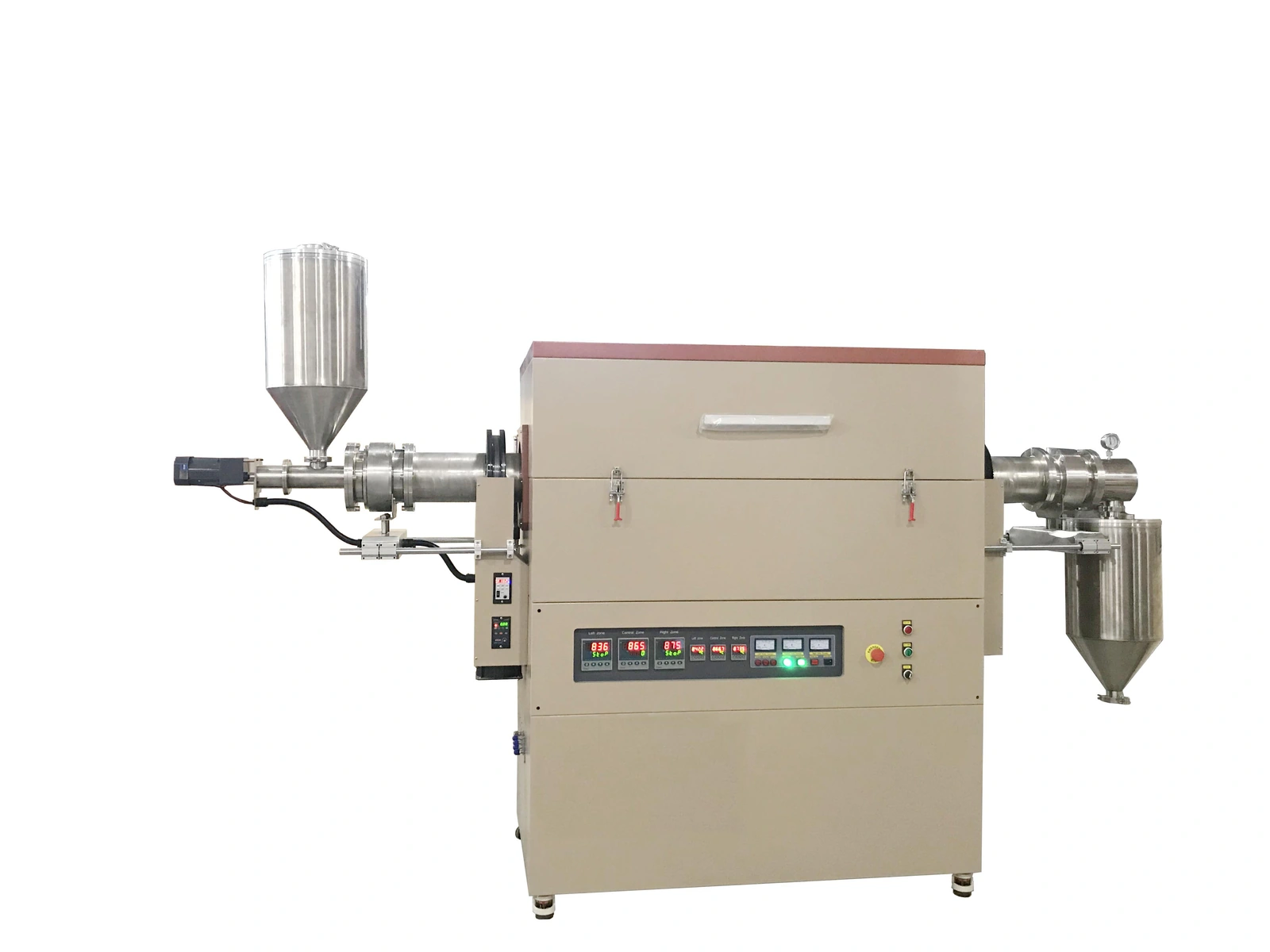
A rotary furnace is considered when powder or granular material must move, turn, mix or progress through a heated tube during processing. The rotating tube, inclination, feed, heated section, atmosphere path, discharge and collection system influence one another. Selection therefore begins with the real material and operating sequence, not with tube rotation as an isolated feature.
Characterize the powder before sizing equipment
Provide material name, composition, particle-size information, bulk behaviour and available safety data. Describe whether it flows freely, bridges, cakes, abrades the tube, creates dust, evolves vapour or changes volume during heating. State contamination limits and any materials that cannot contact the powder. Small representative trials may be needed when movement or reaction behaviour is uncertain.
Choose batch, intermittent or continuous operation deliberately
Define whether a measured batch is loaded and removed as one charge, introduced in controlled portions, or fed continuously toward a defined output rate. Continuous operation adds interfaces for metering, seal management, discharge, collection and coordination with upstream and downstream equipment. A target feed rate alone is insufficient without the required conversion, thermal exposure and material behaviour.
Define rotation and inclination from the movement objective
Explain what rotation must achieve: surface renewal, mixing, reduced agglomeration, controlled progression or another qualified function. Provide the intended direction of travel and any inclination requirement. Rotation speed, inclination and internal tube features are configuration variables; their suitability is confirmed from material behaviour and process evidence rather than assumed as universal settings.
Map the material path from feed to collection
Prepare a simple flow drawing showing storage or preparation, feed device, inlet interface, heated tube, gas direction, discharge, collection vessel, filters and exhaust. Include connection sizes, support requirements and the way the system is opened for loading, inspection and cleaning. Every interface must remain compatible with tube movement and thermal expansion.
Coordinate tube material, heating zones and residence objective
Process-tube material, diameter, length and internal geometry must suit temperature, chemistry, abrasion, cleaning and the required material volume. State the heated exposure needed rather than using furnace length as a proxy for residence time. Zone arrangement and temperature sensors are selected around the material path and the evidence needed at feed, reaction and discharge positions.
Define gas, pressure, dust and exhaust boundaries
List process and purge gases, flow direction, purity objective, pressure condition, pumping arrangement and exhaust destination. Identify combustible, corrosive, toxic, condensable or particulate by-products. Feed and discharge openings can dominate atmosphere quality, so sealing, isolation, collection and pressure relief must be reviewed as one system.
Choose between rotary and stationary furnace routes
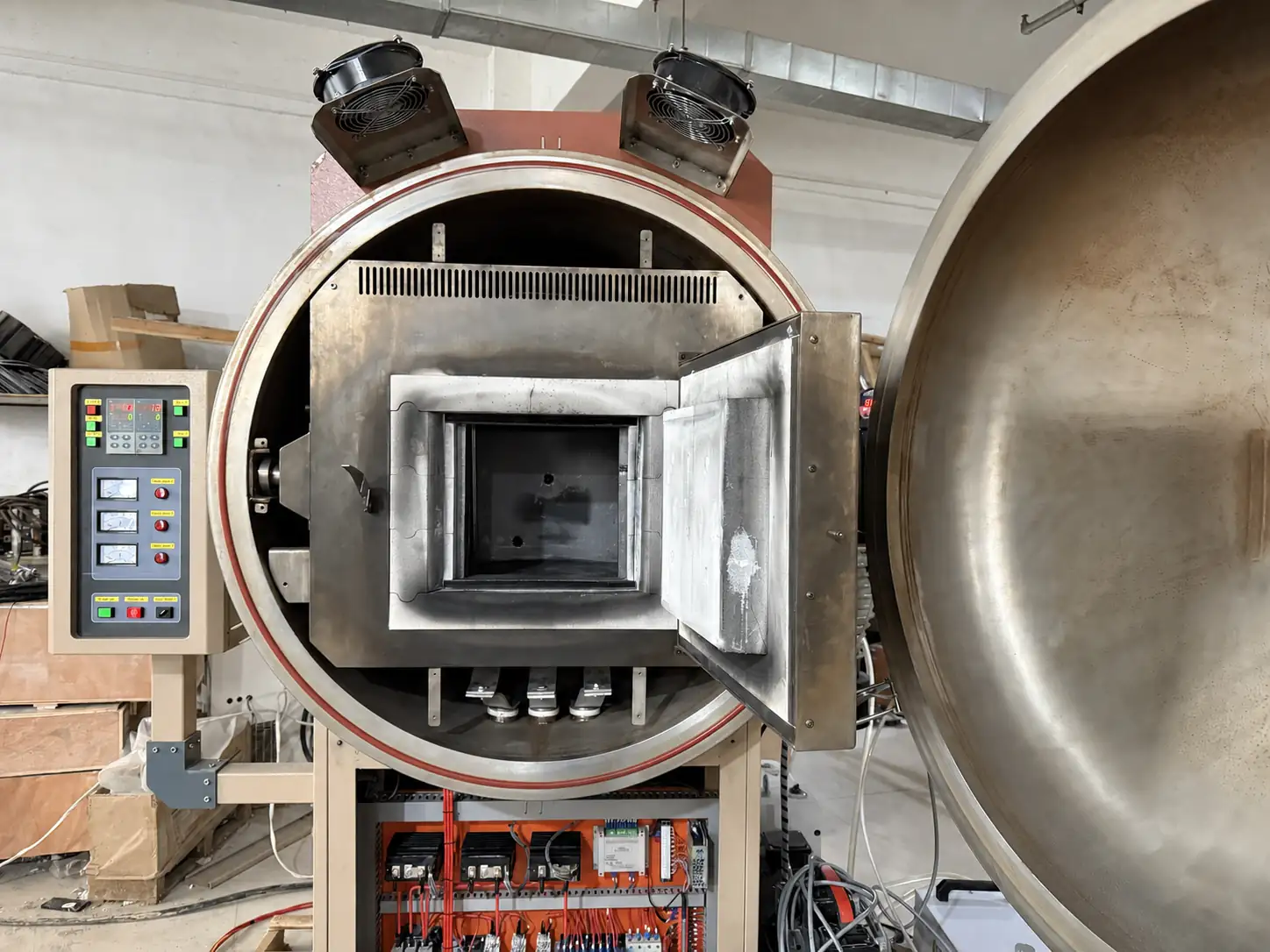
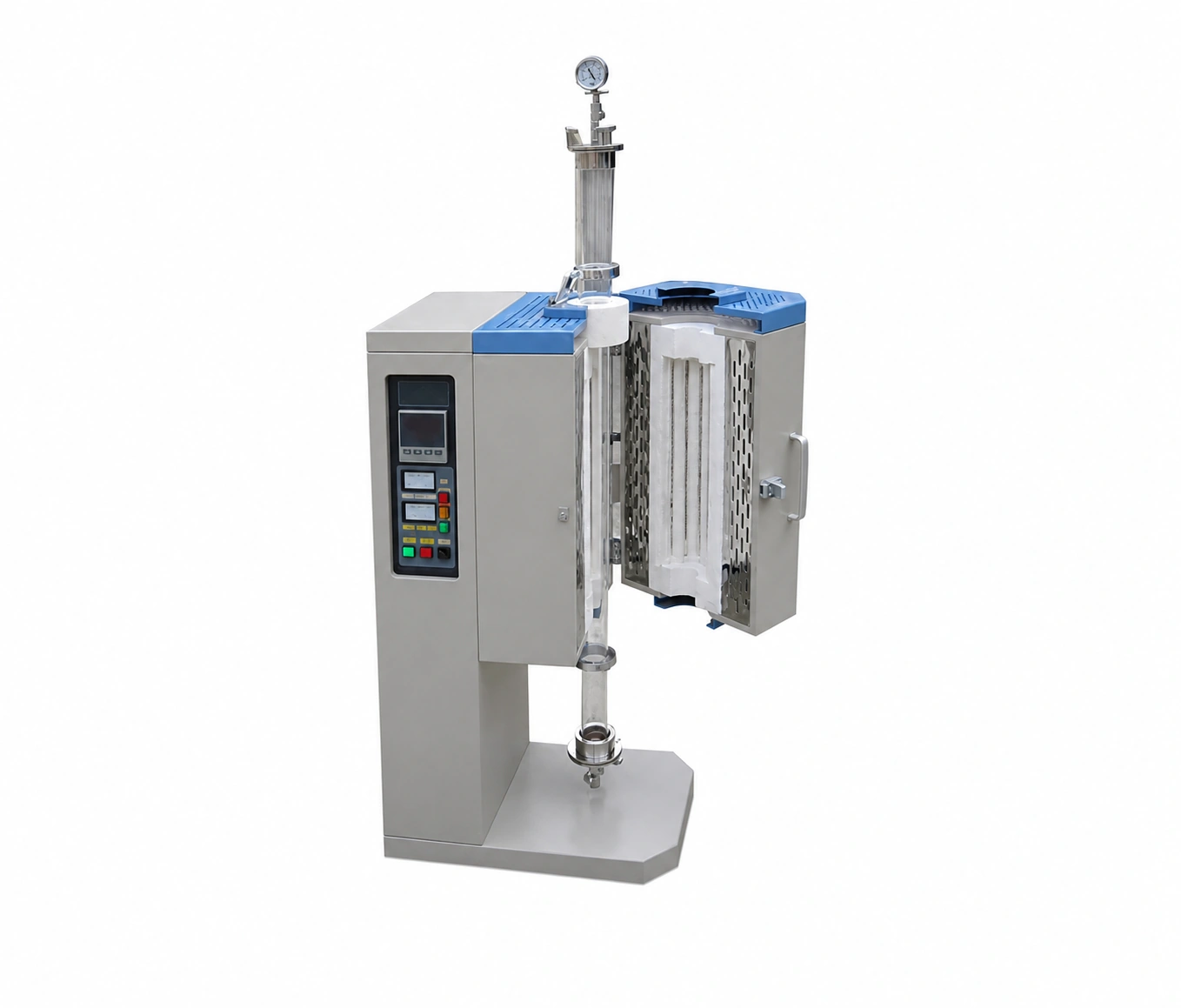
Rotary Tube Furnaces fit when tube rotation and controlled material movement are process functions. A sealed Vacuum & Atmosphere Box Furnace can be more suitable for a stationary batch in a tray or container. A Vertical Tube Furnace may fit a defined gravity-assisted path or suspended sample arrangement without powered tube rotation. The material path decides the route.
Plan discharge, cooling and product recovery
State the required condition at discharge and whether material must remain under a controlled environment while cooling. Describe collection capacity, isolation, transfer, dust containment and the acceptable amount of retained material. Hot powder, reactive product and fine dust require a defined unloading and safe-access sequence.
Design for cleaning, inspection and changeover
Provide cleaning method, allowable residue, campaign length and changeover expectations. Access may be needed to the feeder, seals, tube interior, flights or other internal features, discharge, collection vessels, filters and exhaust. Tube removal, support alignment and service clearance must be included in the installation envelope.
Establish development and scale-up evidence
For development, record feed condition, batch or feed rate, tube setup, rotation, inclination, zone temperatures, gas conditions, residence evidence and recovered product. For scale-up, state which outcome must be maintained and which variables may change. Equipment geometry alone does not guarantee the same powder behaviour at a different throughput.
Information required for a powder-processing inquiry
- Material identity, composition, particle form and available safety information
- Process objective and required product condition
- Batch mass or target feed rate and operating hours
- Flow, sticking, abrasion, dust, vapour and contamination behaviour
- Working temperature, thermal exposure and zone requirements
- Batch, intermittent or continuous operating preference
- Rotation, inclination and material-movement objective
- Tube material or compatibility restrictions
- Gas, pressure, purge, pumping, filtration and exhaust requirements
- Feed, discharge, cooling, collection and cleaning expectations
- Utilities, controls, data, installation space and destination