
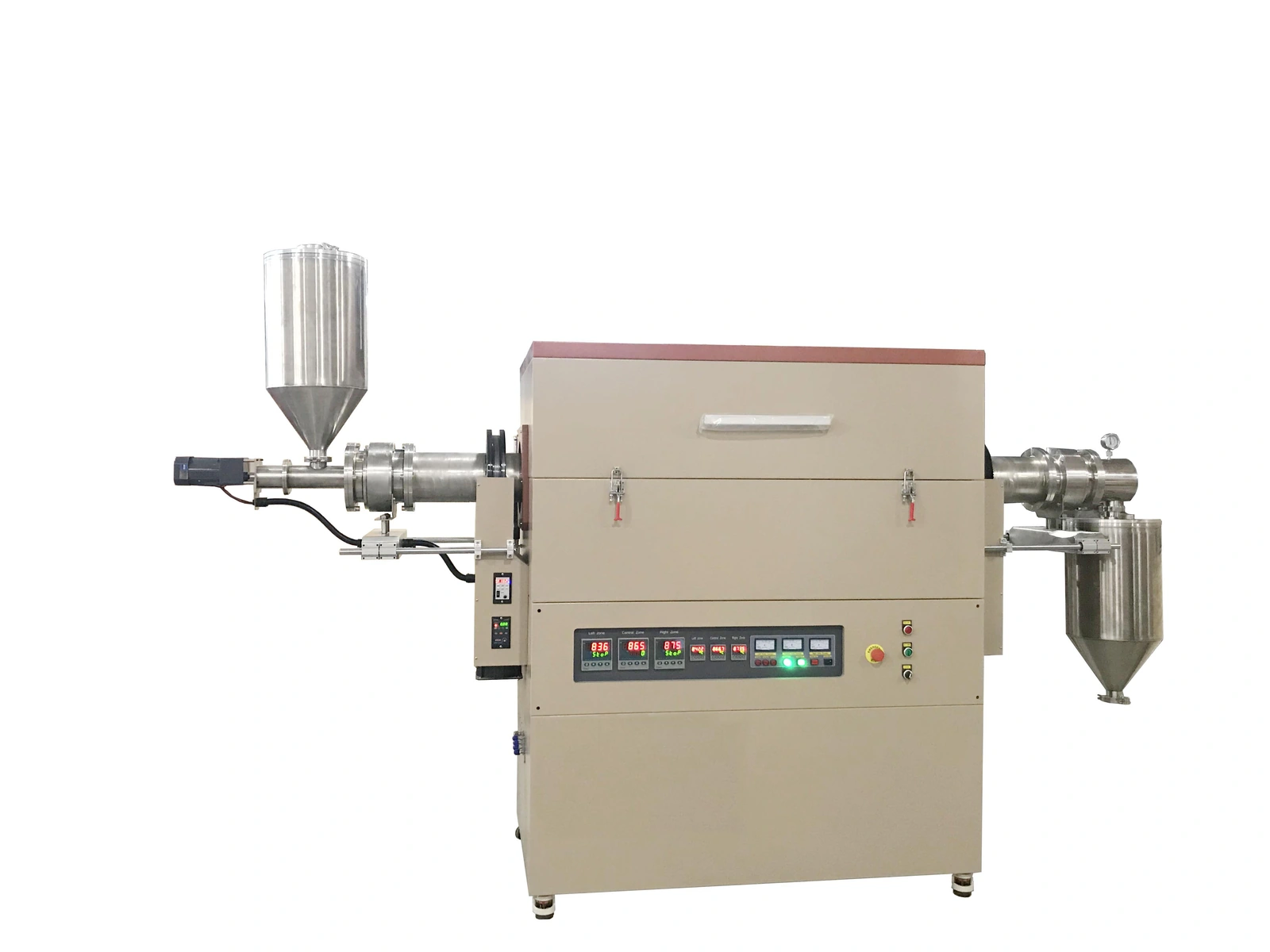
When rotation is part of the process
A rotary tube furnace is a candidate when material movement, mixing or exposure inside a rotating process tube is required during heating. Selection begins with the feed, material behaviour and process objective rather than a nominal furnace temperature alone.
MaterialPowder or granule form, particle behaviour, contamination limits and batch or continuous objective.
MovementRotation, inclination, feed method, residence objective and discharge handling.
ThermalWorking cycle, heated length, zones and cooling boundary.
EnvironmentAir or qualified gas/vacuum arrangement, sealing and exhaust requirements.
Define the complete handling boundary
The furnace body is only one part of a rotary system. A useful proposal must separate what is required for feeding, process-tube rotation, heating, atmosphere management, discharge and collection. Optional equipment is confirmed only after those interfaces are reviewed.
Send these project inputs
- Material name, form and available safety information
- Batch size or target feed rate
- Working temperature and desired thermal exposure
- Tube material and dimensional constraints
- Atmosphere, gas flow, exhaust or vacuum requirement
- Feed, discharge and collection expectations