
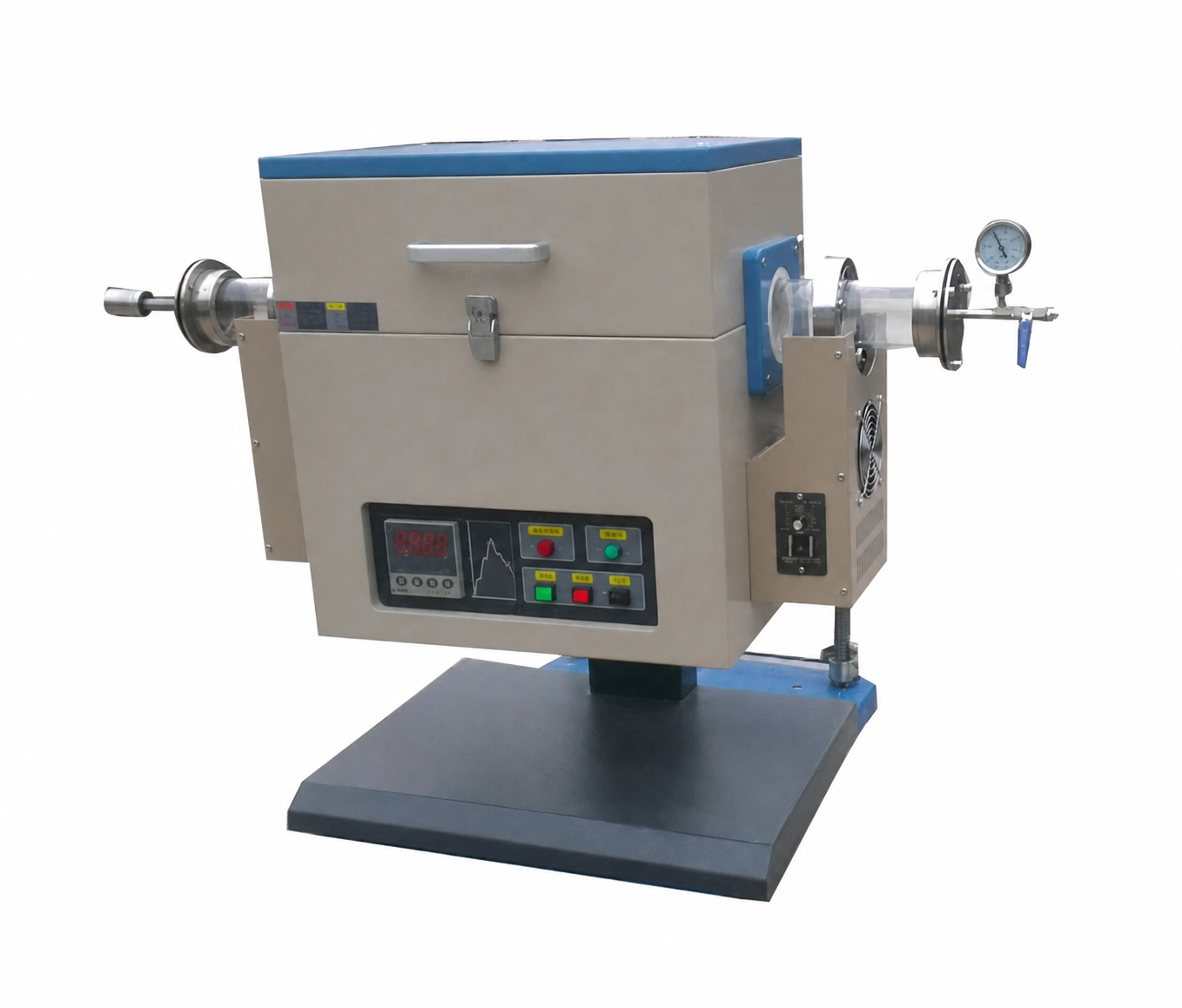
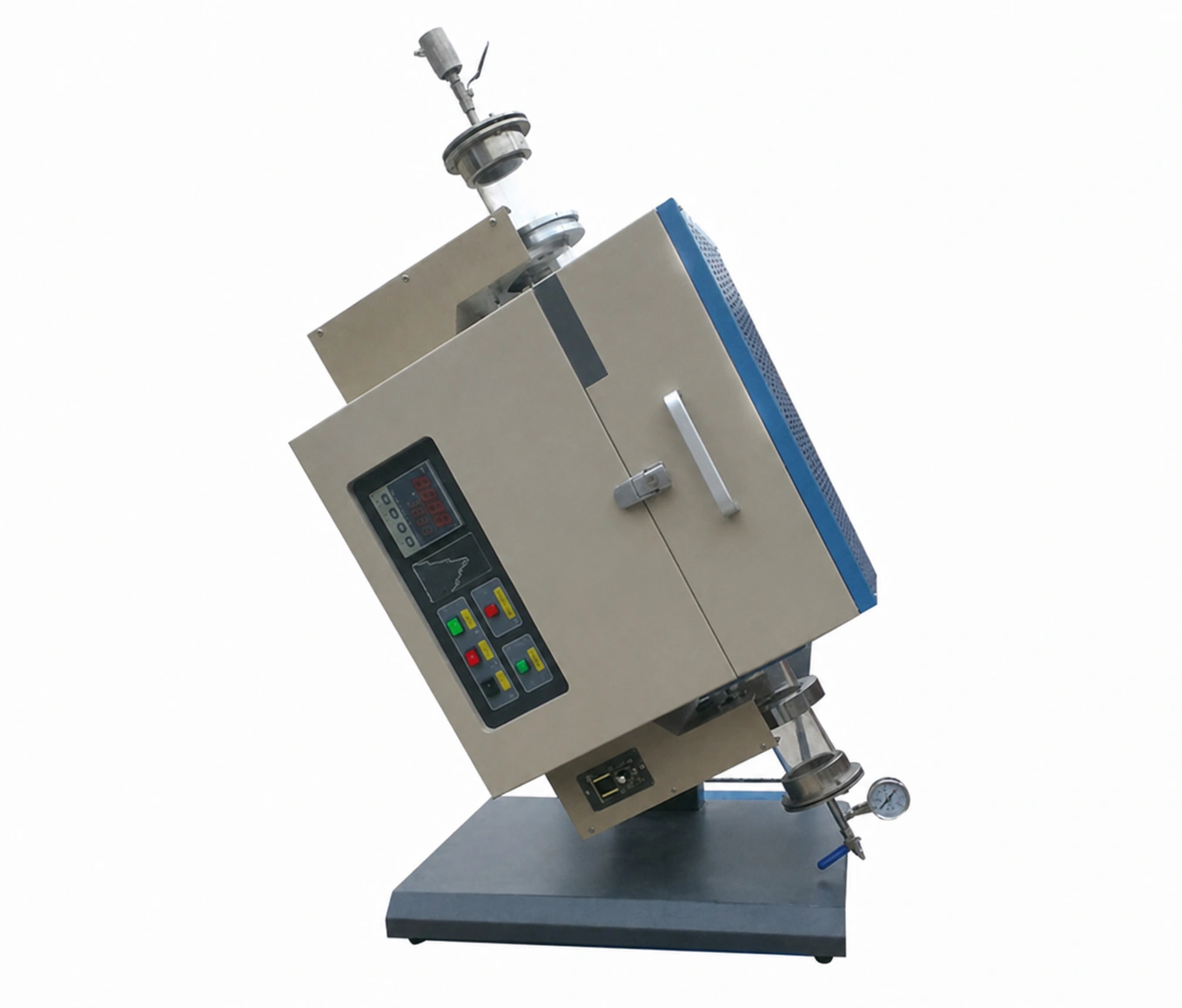
Change process orientation without assuming tube rotation
This product route uses a furnace body mounted on a pivot support so the process tube can be positioned horizontally, at an incline or near vertically within the qualified mechanical range. It is an adjustable-orientation configuration, not a powered rotating-tube drive. Applications that require continuous tube rotation should use the separate Rotary Tube Furnaces route.
Define why the angle must change
State whether the furnace is repositioned only when cold, set to one operating angle for a campaign, or moved as part of a qualified process sequence. Describe how the sample is held and what gravity is expected to do. An inclination request without the sample and holder information is not enough to confirm a stable arrangement.
Map every clearance through the movement arc
Provide the tube length, end assemblies, gauge and valve envelope, service hoses, sample-loading tools and available room around the furnace. Clearance must be checked at the horizontal position, the intended inclined position and any vertical or service position. The base must remain stable and the locking mechanism accessible.
Support the process tube and load at each approved angle
Tube material, diameter, wall, hot length and end support determine how the assembly responds to gravity and thermal expansion. Define the holder, boat, plug or suspension method and the allowable movement of the load. End fittings and unsupported tube length must be reviewed against the chosen orientation.
Keep atmosphere services controlled during repositioning
Gas, vacuum and exhaust connections may require flexible routing or disconnection before movement. State which services remain connected, their bend radius, allowable load on the flanges and the required purge or isolation sequence. The pressure boundary is qualified for the complete tube-and-end assembly in the approved operating position.
Qualify the thermal cycle at the actual orientation
Sample position, gas flow and natural convection can change with orientation. Define the working temperature, ramp, hold, cooling and required measurement position for the intended angle. If comparable results are required at different angles, identify the acceptance method and repeatability criteria.
Safety and control requirements
Discuss mechanical locking, position indication, movement limits, hot-surface guarding, cable and hose management, over-temperature protection and any condition that must inhibit heating or movement. State whether repositioning is manual or requires another approved mechanism.
Information required for an adjustable-angle furnace RFQ
- Material, sample form, holder and process objective
- Required operating angle or angle range and reason for adjustment
- Whether movement occurs cold, warm or as part of the process
- Tube material, diameters, length, supports and end assemblies
- Working temperature, heated length and complete cycle
- Gas, pressure, pumping, purge and exhaust conditions
- Flange, gauge, valve, hose and loading-tool clearances
- Installation footprint, available height and local utilities
- Locking, guarding, interlock and documentation requirements