
Specify MoSi2 from the furnace duty outward
Molybdenum disilicide heating elements are selected within a complete high-temperature furnace design. Element grade, geometry, electrical grouping, atmosphere, chamber construction, thermal cycle and mounting method must be reviewed together. A generic maximum-temperature label is not enough to confirm a replacement or new installation.
Distinguish element grade from furnace capability
The selected element is only one part of the temperature boundary. Chamber insulation, terminals, conductors, sensing, controls and the load all influence the usable furnace duty. State the required working cycle and current furnace design so the element specification is not treated as an isolated temperature claim.
Dimension the installed shape
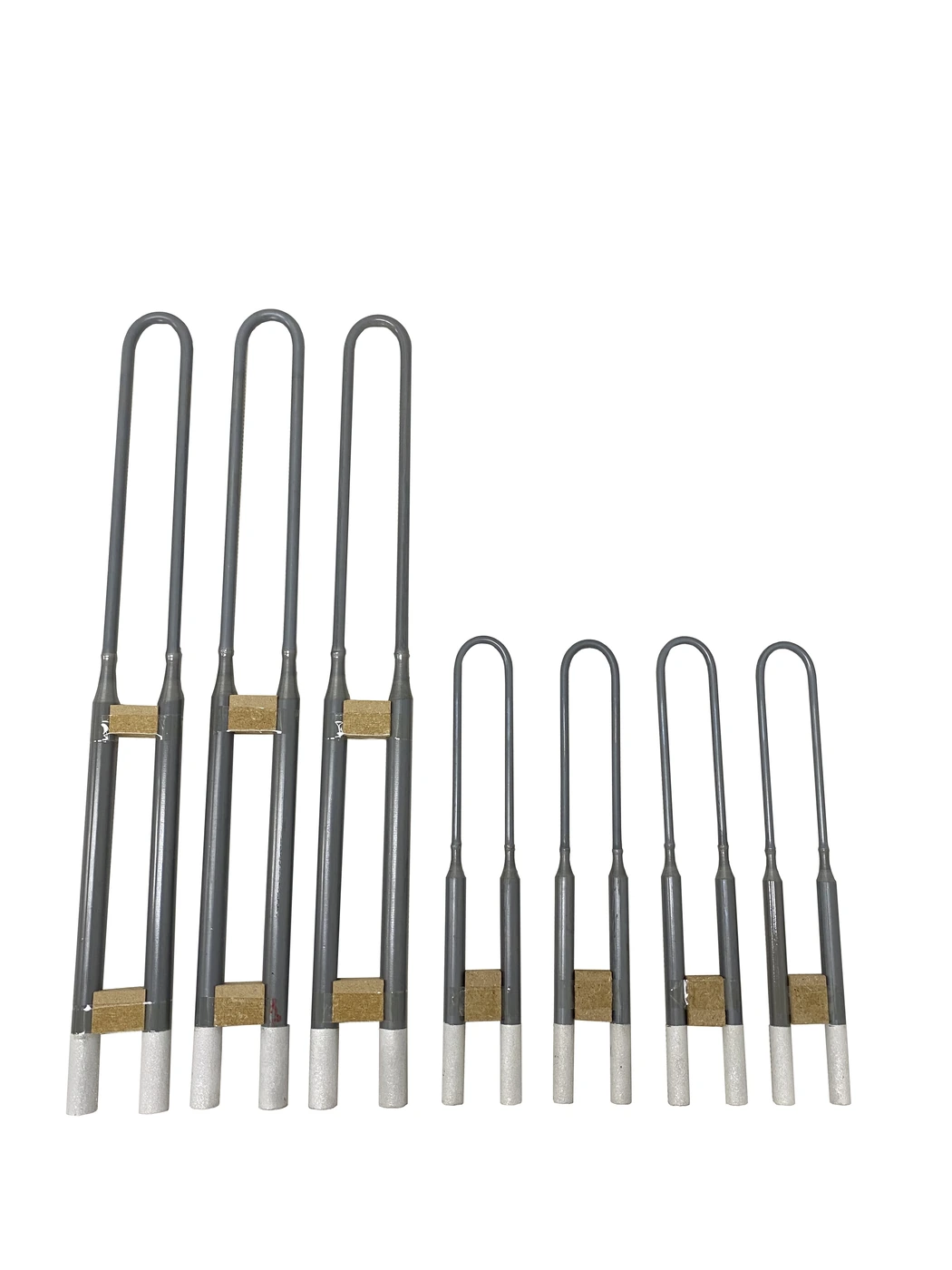
Provide the element diameter or section, hot-zone length, cold-end length, terminal spacing and overall length. For U-shaped or multi-leg arrangements, show the centre distance, bend orientation and how the element is suspended or supported. Include the insulation opening and available terminal clearance.
Coordinate resistance and connections
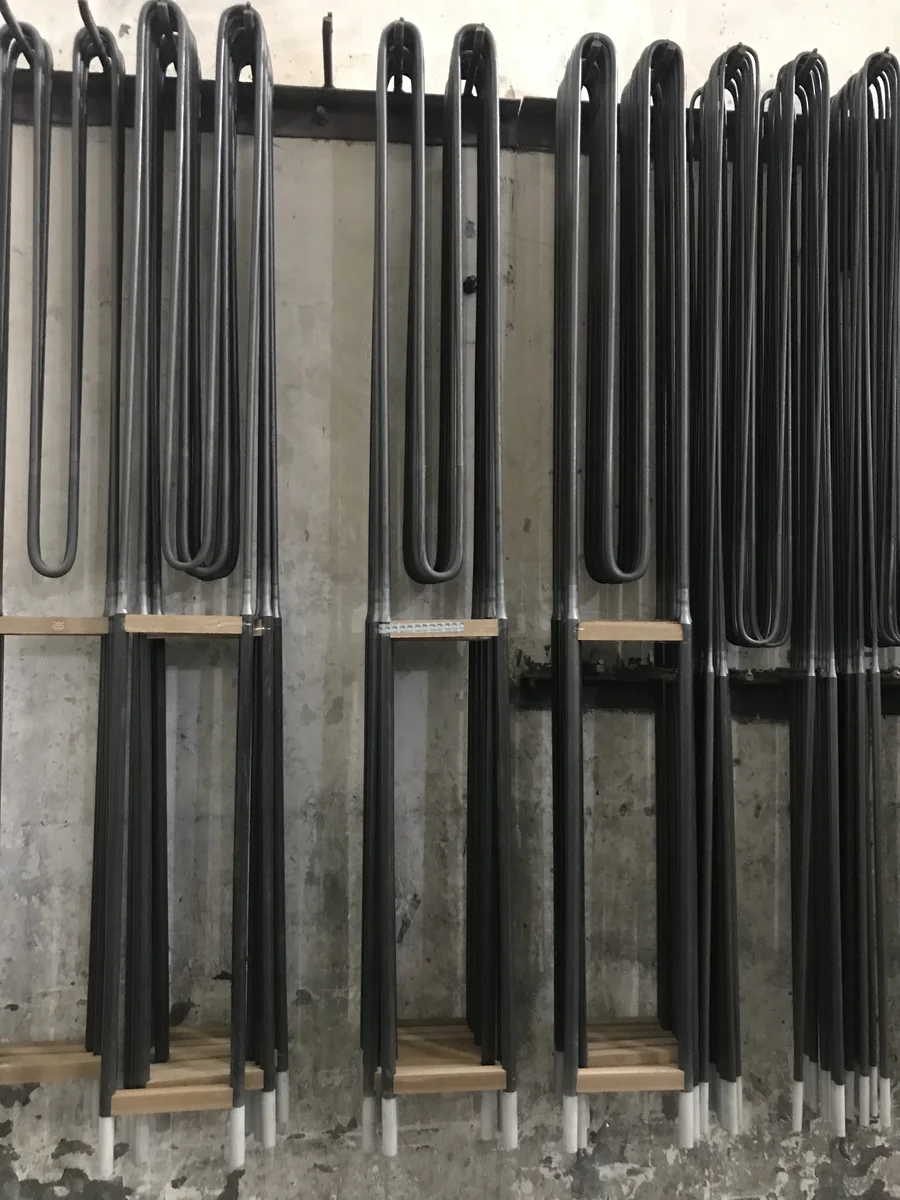
Supply the required or existing resistance, quantity of elements, electrical grouping and connection method. Photographs should show the terminal ends, straps or connectors, support arrangement and the relationship to the furnace enclosure. State the power supply and transformer or controller information where applicable.
Describe atmosphere and process exposure
Tell Pyrocore what materials are heated, whether vapours or binders are released, which atmosphere is used and how the furnace starts, stops and cools. These conditions are required for application review and for planning the surrounding chamber and terminal environment.
Prepare a complete MoSi2 inquiry
- Element grade or existing element designation
- Dimensioned element drawing
- Hot-zone, cold-end, spacing and overall dimensions
- Resistance, quantity and electrical grouping
- Working temperature and full cycle
- Atmosphere and processed material
- Installation, terminal and chamber photographs
- Power supply, destination and documentation needs
When the chamber and element assembly are required together, review Metal-Shelled Furnace Chambers.